LED Star Ceiling Lights: Fiber Optic Stars vs LED Panels vs Projectors for Bedrooms, Theaters & Basements
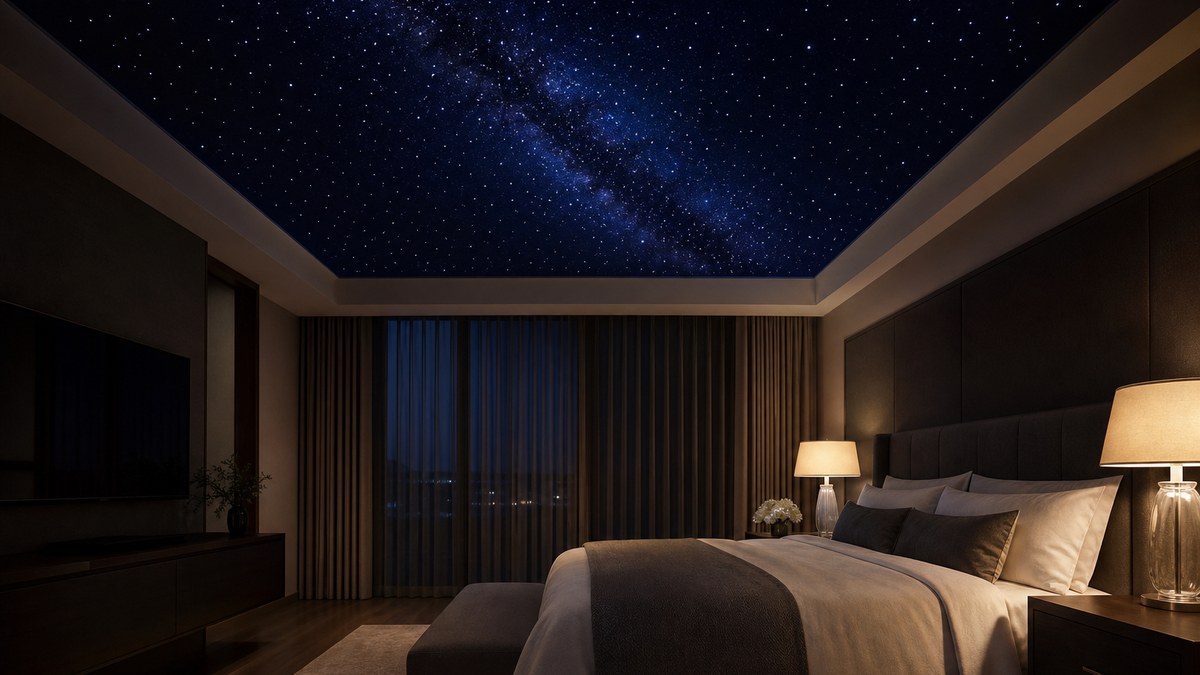
LED star ceiling lights turn an ordinary ceiling into a night sky. Search for them and you will find everything from small plug-in projectors to ceiling panels with stars already built in to fully custom fiber optic ceilings with twinkling, shooting stars and a glowing Milky Way. They all promise "stars on your ceiling," but they look, cost, install and last very differently.
This guide explains the main types of star ceiling lights, how each one works, how they compare on realism and installation, which one suits a bedroom, kids' room, home theater, basement or commercial space, and what to check before you buy. It is written for homeowners, designers, theater and AV integrators, and contractors planning a starlight ceiling.
For a permanent, realistic star ceiling, fiber optic star lights are the standard: one LED light engine feeds hundreds of fiber strands, and each fiber tip becomes a pinpoint star. Projectors are a quick temporary effect; LED star panels are a middle ground.
- Fiber optic star ceiling: most realistic, permanent, twinkle and shooting star effects, safe in humid rooms
- Pre-made star panels: fibers pre-installed in acoustic or ceiling panels, faster to install
- LED "star" downlights and strips: decorative, but look like small lights rather than stars
- Star projectors: plug-in, no installation, but soft, temporary and washed out by room light
- Best rooms: bedrooms, kids' rooms, home theaters, basements, spas, restaurants and lounges
- Pricing: depends on system type, ceiling size, star density, effects and installation
How LED star ceiling lights work
Almost every serious star ceiling uses the same basic idea: put many tiny points of light into the ceiling surface and vary their brightness, so the eye reads them as stars. The difference is where the light comes from.
Fiber optic star lights
A fiber optic system has three parts:
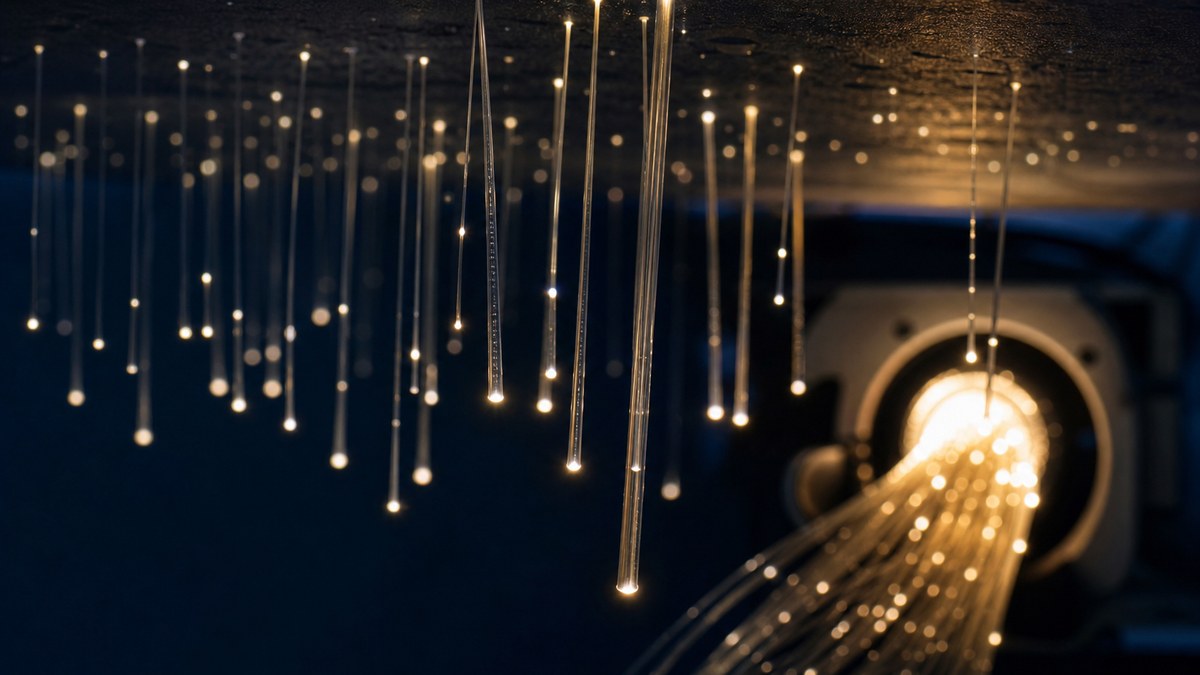
- Light engine (illuminator): an LED light source hidden in the attic, a closet or above a drop ceiling. It powers every star and contains the effects: twinkle wheels or electronic twinkle, color changing, and dimming.
- Fiber optic strands: thin acrylic (PMMA) or glass fibers that carry light from the engine to the ceiling. Using several diameters creates bright and faint stars.
- Ceiling surface: drywall, star panels, acoustic tiles or stretch fabric. Each fiber passes through a small hole and is trimmed flush, so the tip glows as a single star.
Because the fibers carry only light, there is no electricity or heat at the ceiling surface. That makes fiber optic stars a good fit for bathrooms, saunas, pool houses and spas, as long as the light engine sits in a dry, ventilated spot.
LED star panels
Star panels are ceiling or acoustic panels with fibers or micro-LEDs already installed. They mount to an existing ceiling, drop into a grid or form a floating "cloud." Installation is faster because the fiber work happens before the panels arrive.
LED downlights and strips sold as "star lights"
Some products use tiny LED downlights or LED strips with small lenses. They can look attractive, but each point is a small light fixture rather than a pinpoint, so the effect reads as decorative lighting more than a real night sky.
Star projectors
Projectors sit on a shelf or nightstand and shine a pattern of dots, nebula clouds or laser points onto the ceiling. They are fun for kids and require no installation, but the image is soft, fades in ambient light and disappears when you move the projector.
Star ceiling lights compared
| Type | Realism | Effects | Installation | Best for |
|---|---|---|---|---|
| Custom fiber optic | Highest — true pinpoint stars, varied brightness | Twinkle, shooting stars, color, Milky Way, constellations | Professional or skilled DIY; attic access helps | Theaters, master bedrooms, commercial spaces |
| Fiber optic kit (DIY) | High in small rooms | Twinkle and color on most kits | A weekend of careful drilling and threading | Kids' rooms, bedrooms, accent ceilings |
| Pre-made star panels | High | Twinkle, color; acoustic panels absorb sound | Mount like ceiling panels | Theaters, media rooms, basements, drop ceilings |
| LED "star" downlights / strips | Moderate — look like small lights | Dimming, some color | Electrical install | Decorative accents, hallways |
| Star projector | Low to moderate; soft image | Nebula, color, motion | None — plug in | Kids' rooms, renters, temporary fun |
Fiber optic star ceiling vs LED projector
This is one of the most common questions. A projector is a quick, inexpensive way to try the look; a fiber optic ceiling is a permanent feature of the room.
- Image quality: fiber tips are sharp points of light in the ceiling itself. Projected dots are softer and spread out with distance.
- Ambient light: fiber stars stay visible with a lamp on; projections wash out quickly.
- Permanence: fiber ceilings stay in place; projectors move, get bumped and need re-aiming.
- Effects: both can change color; fiber systems add true twinkle, shooting stars and Milky Way bands.
- Installation: projectors need none; fiber ceilings need planning and installation.
If you want to test whether you like stars overhead, a projector is a fine start. If you want the room to feel like it sits under a real sky every night, choose fiber optic.
Best star ceiling lights by room
Bedrooms and master suites
A star light bedroom ceiling should feel calm, not busy. Choose a natural density, warm white or soft blue tones and slow twinkle, with a dimmer or remote by the bed. Many couples add a constellation map of a meaningful date. A timer that fades the stars after you fall asleep is a nice touch.
Kids' rooms and nurseries
Kids love shooting stars and color, but keep brightness low enough to work as a nightlight. A DIY fiber optic kit or small star panel suits most kids' rooms, and remote control lets parents switch modes. Keep the light engine and wiring out of reach.
Home theaters and media rooms
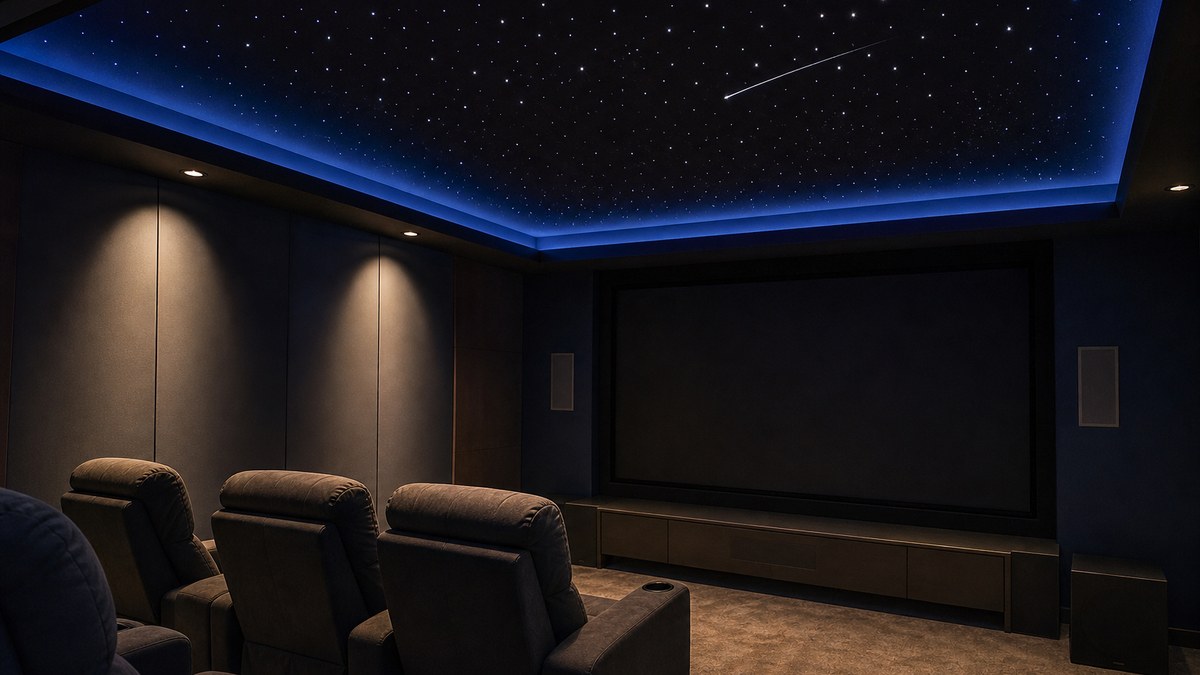
The theater is the classic star ceiling. Use a dense, multi-diameter layout, twinkle, shooting stars and a Milky Way band, with a perimeter "horizon" glow. Acoustic star panels add sound absorption, which helps in hard-surfaced rooms. Integrate controls with your theater system so stars dim when the movie starts.
Basements
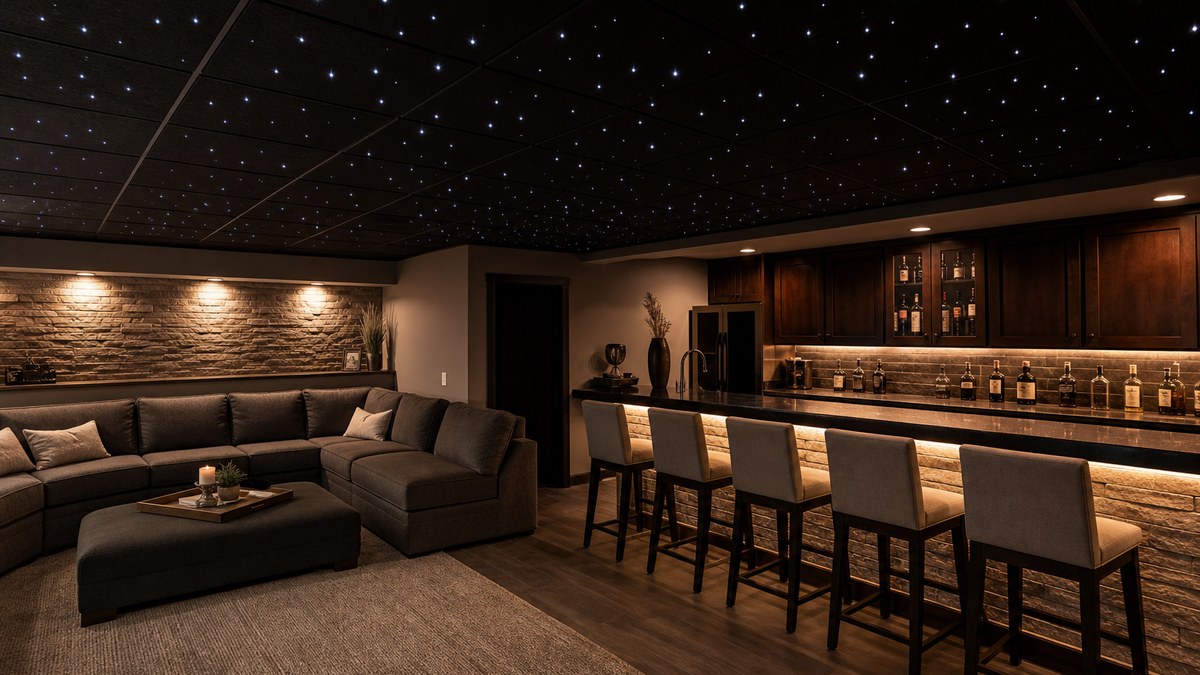
Basement ceiling star lights are popular because basements often have drop ceilings or open joists. Star tiles can replace standard drop-ceiling tiles, and open joists make it easy to route fibers before drywall goes up. In finished basements without access above, surface-mounted star panels avoid opening the ceiling.
Bathrooms, saunas and spas
Fiber optic stars are well suited here because the fibers carry no electricity. Mount the light engine outside the wet area, in a dry, ventilated location, and follow local electrical codes.
Restaurants, bars, lounges and hotels
Commercial star ceilings set a mood guests remember. Plan for larger areas, color scenes for different times of day, durable controls staff can use, and coordination with fire and building codes. Our partners at American Starlight Ceilings handle custom commercial installations, and for whole-building lighting our sister company WDM Lighting takes on large projects.
Planning a star ceiling with Wiedamark LED?
Tell us the room size and the effects you want, and we will recommend components, a kit or an installation partner.
Star ceiling design ideas
A few design choices make the difference between "lights in the ceiling" and a sky that feels real:
- Vary brightness: mix a small number of bright stars with many faint ones, the way the real sky looks away from city lights.
- Avoid grids: randomize placement and leave some areas sparse; real skies cluster and thin out.
- Add a Milky Way band: a soft diagonal band of dense, faint stars instantly reads as "night sky" in theaters and bedrooms.
- Use a dark ceiling finish: deep navy or black paint, fabric or panels make stars pop and hide fiber holes.
- Frame it: a tray ceiling, cove or floating panel with a soft perimeter glow gives the sky a horizon.
- Mind the sightlines: in theaters, keep shooting stars out of the screen area so they do not distract from the film.
- Personalize: map a constellation from a birthday, anniversary or favorite place for a meaningful focal point.
- Plan the dark: stars look best with other lights off or low, so put room lighting on dimmers and scenes.
For larger or unusual ceilings, such as vaulted rooms, curved soffits or commercial lounges, a short design session before ordering helps size the light engines, fiber lengths and effect zones correctly. It also avoids the most common DIY mistake: running out of fiber length to reach the far corners.
What to look for before you buy
Fiber count and diameters
More fibers mean more stars, but realism comes from variety. Look for several diameters so you get a few bright "anchor" stars and many faint ones. A single diameter looks flat and artificial.
Light engine quality
The engine decides brightness, color quality and effects. Check that it is rated for the number of fibers you plan to use, that it runs quietly (fans matter in bedrooms and theaters), and that it has adequate ventilation where it will be mounted.
Effects and controls
Decide which effects you actually want: steady stars, twinkle, shooting stars, color, Milky Way. Then check the control options: remote, app, wall control or integration with smart-home and theater systems.
Fiber length
Fibers must reach from the light engine to the far corners of the ceiling. Measure the route through the attic or ceiling space, not just the room, and allow extra length.
Ceiling type and access
Attic access above drywall, a drop ceiling or open joists makes installation much easier. Finished ceilings with no access may call for star panels or a second ceiling layer.
Support and parts
Buy from a supplier who can help you size the system and support it later, including replacement light engines and add-ons such as extra shooting star paths.
How a fiber optic star ceiling is installed
- Plan the layout: star density, bright-star placement, constellations and shooting star paths.
- Locate the light engine: accessible, dry and ventilated, within reach of the fiber bundle.
- Prepare the ceiling: confirm access above, or prepare panels or a second layer.
- Drill and thread: small holes for each fiber, fibers fed through from above or into panels.
- Shuffle the fibers: mix fibers from different parts of the bundle so neighboring stars twinkle independently.
- Connect and secure: bundle fibers into the engine's port and secure runs.
- Trim and test: trim fibers flush, power up, set twinkle speed, color and effects.
Pre-made star panels skip most of these steps: the fiber work is done in advance and panels mount like ordinary ceiling panels.
DIY or professional?
DIY fiber optic kits are a good fit for small rooms if you are patient and comfortable working in an attic. Professional installation makes sense for theaters, large rooms, finished ceilings without access, constellation mapping, Milky Way bands and any commercial space. A professional also handles electrical connections, code requirements and clean fiber terminations.
Care and maintenance
- Dust the ceiling occasionally with a soft brush or vacuum on low.
- Keep the light engine's vents clear and the area around it dry.
- If stars dim over time, check the engine first; fibers themselves have no bulbs.
- Avoid sharp bends or crushing fiber bundles when working in the attic later.
Why buy from Wiedamark LED
Wiedamark LED supplies fiber optic starlight components and kits, fiber optic lighting and commercial and architectural LED products, and helps you choose the right system for the space. Our team brings 15+ years as an authorized architectural lighting dealer and project coordinator, and for custom installation we work with American Starlight Ceilings. For pools and architectural outlines, see 360° laser fiber optic lighting.
Learn more in our starlight effects guide, our guide to what drives star ceiling cost, and how LED star light ceilings work.
Frequently Asked Questions
What are the best LED star ceiling lights?
Are fiber optic star ceilings better than projectors?
Can I put star lights on a bedroom ceiling?
Can I install star lights in a basement ceiling?
Do star ceiling lights need an electrician?
How many stars should a ceiling have?
Do fiber optic star lights get hot?
Can star ceiling lights change color?
How long do star ceiling lights last?
Where can I buy star ceiling components or a kit?
Bring the night sky indoors
Send us your room size and the effects you want, and we will follow up with recommendations and a quote.
Related
Our lighting network: starlight ceiling installation, 360° fiber optic lighting, premium pool lighting, WDM Lighting large projects, Dallas commercial LED lighting, Texas LED lighting, Plano LED lighting, LED signage, modular building solutions and Dallas modular structures.