How Much Does a Star Ceiling Cost? What Drives Starlight Ceiling Pricing
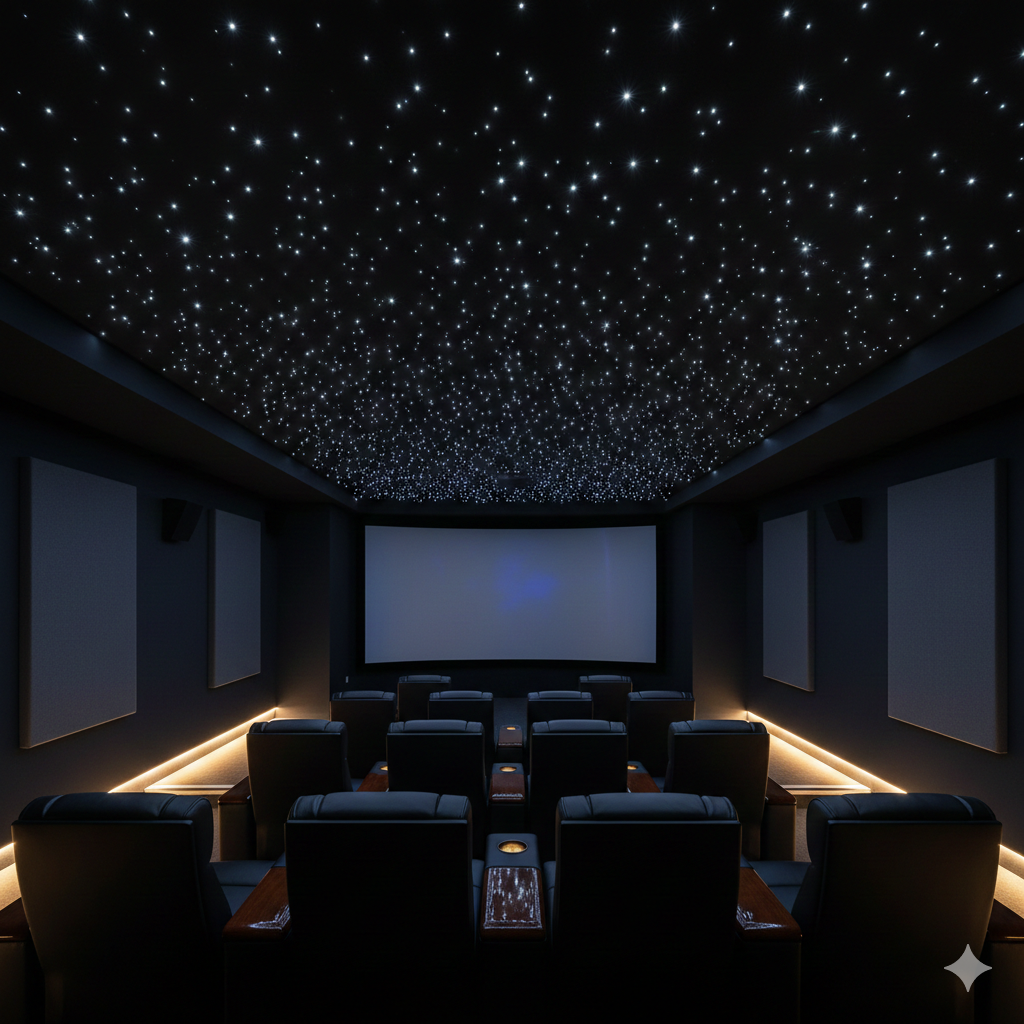
A star ceiling transforms any room into a private planetarium — and it's one of the fastest-growing luxury lighting upgrades in both residential and commercial spaces. Before you commit, it helps to understand what drives the cost of a starlight ceiling, from a simple DIY kit to a large commercial fiber optic installation.
Whether you're building a home theater, upgrading a restaurant, or creating a relaxation space for a spa, this guide breaks down every cost factor so you can plan your budget and compare quotes with confidence.
If you're new to the concept, start with our guide on how LED star light ceilings work first, then come back here for the cost factors.
Quick Answer: What Determines Star Ceiling Cost?
Star ceiling cost depends mainly on the type of system (DIY kit, pre-made star panels or custom fiber optic installation), the ceiling area, star density, effects and controls, ceiling access and who installs it. Every custom project should be quoted after the room is measured.
Key Takeaways:
- DIY fiber optic kits: the lowest-cost route, best for small rooms and accent ceilings
- Pre-made acoustic star panels: plug-and-play, fast to install, add sound absorption
- Professional custom installation: highest realism, any size, custom constellations and effects
- Commercial installations: restaurants, theaters, hotels and spas, scoped per project
- Low running cost: one light engine powers the whole ceiling and the fibers have no bulbs to burn out
Star Ceiling Options Compared
| Option | Best for | Realism | Install effort |
|---|---|---|---|
| LED star projector | Kids' rooms, temporary fun | Low | None |
| DIY fiber optic kit | Small bedrooms, nurseries, accent areas | Medium | A weekend of careful work |
| Pre-made acoustic star panels | Theaters, media rooms, drop ceilings | High | Low to moderate |
| Custom fiber optic installation | Home theaters, master suites, commercial spaces | Highest | Professional installation |
For the most realistic night-sky effect, professional-grade fiber optic systems are the industry standard. The team at American Starlight Ceilings specializes in custom residential and commercial installations that use multi-diameter fiber strands with twinkling, shooting star, and color-changing effects.
7 Factors That Affect Star Ceiling Cost
No two star ceilings cost the same. These are the specific variables that move the price up or down.
1. Room Size and Ceiling Area
Larger rooms require more fiber optic strands, more panels, and more labor. A 100 sq ft bedroom ceiling costs significantly less than a 500 sq ft home theater or a 2,000 sq ft restaurant dining room. Many installers quote by ceiling area, so measuring the room is the first step to an accurate quote.
2. Star Density (Fibers Per Square Foot)
More stars means more fiber strands, which directly increases material and labor costs. Budget installations use a sparse layout, mid-range projects add more stars, and premium installations designed to replicate an actual night sky use dense, multi-diameter fiber layouts for realistic variation.
3. Fiber Optic vs. LED Technology
Fiber optic systems use a single LED light engine to power hundreds of individual fiber strands — the fibers themselves carry no electricity, making them safe for wet environments like pools and bathrooms. Straight LED systems (like star projectors) are cheaper but far less realistic. For professional-grade results, fiber optic is the clear choice. For architectural outlines, pools and water features, 360° laser fiber optic lighting is a related option.
4. Effects and Controls
Basic static star points are the least expensive. Adding twinkling effects, shooting stars, RGBW color-changing, and Bluetooth/WiFi control increases cost. App and remote-controlled light engines give you control over twinkling speed, shooting star frequency and color, and each added effect adds to the scope.
5. Ceiling Accessibility
If your ceiling has attic access above it, installation is straightforward and less expensive. Finished ceilings without crawl space access are the hardest (and most expensive) to work with — sometimes requiring removal of existing drywall or the addition of furring strips and a second layer. Drop ceilings are the easiest, as star panels simply replace existing tiles.
6. Custom Constellation Patterns
Want the exact view from the International Space Station? Custom constellation maps with zodiac signs, the Milky Way, or specific seasonal star patterns cost more due to the design time and precision fiber placement required.
7. DIY vs. Professional Installation
A DIY kit saves on labor, but the result depends entirely on your skill level. Professional installation ensures optimal fiber placement, clean terminations, and proper light engine positioning. For commercial spaces like restaurants and hotels, professional installation is essential. Our partners at American Starlight Ceilings handle custom installations.
Star Ceiling Scope by Project Type
| Project type | Typical approach | What drives scope |
|---|---|---|
| Kids' room / nursery | DIY kit or small panel set | Area, soft twinkle, simple controls |
| Master bedroom | Panels or custom fiber | Density, constellations, warm white or color |
| Home theater | Acoustic star panels or custom fiber | Size, shooting stars, Milky Way, acoustics |
| Bathroom / spa / sauna | Custom fiber (light engine kept dry) | Moisture-rated design, access |
| Restaurant / bar / lounge | Custom fiber or panels | Area, effects, color scenes, fire and building codes |
| Hotel / spa / commercial | Custom fiber, phased | Multiple rooms, controls, schedule |
Pool and aquatic fiber optic installations require waterproof, marine-grade systems. Our partners at Premium Pool Lighting focus on fiber optic pool and water feature lighting.
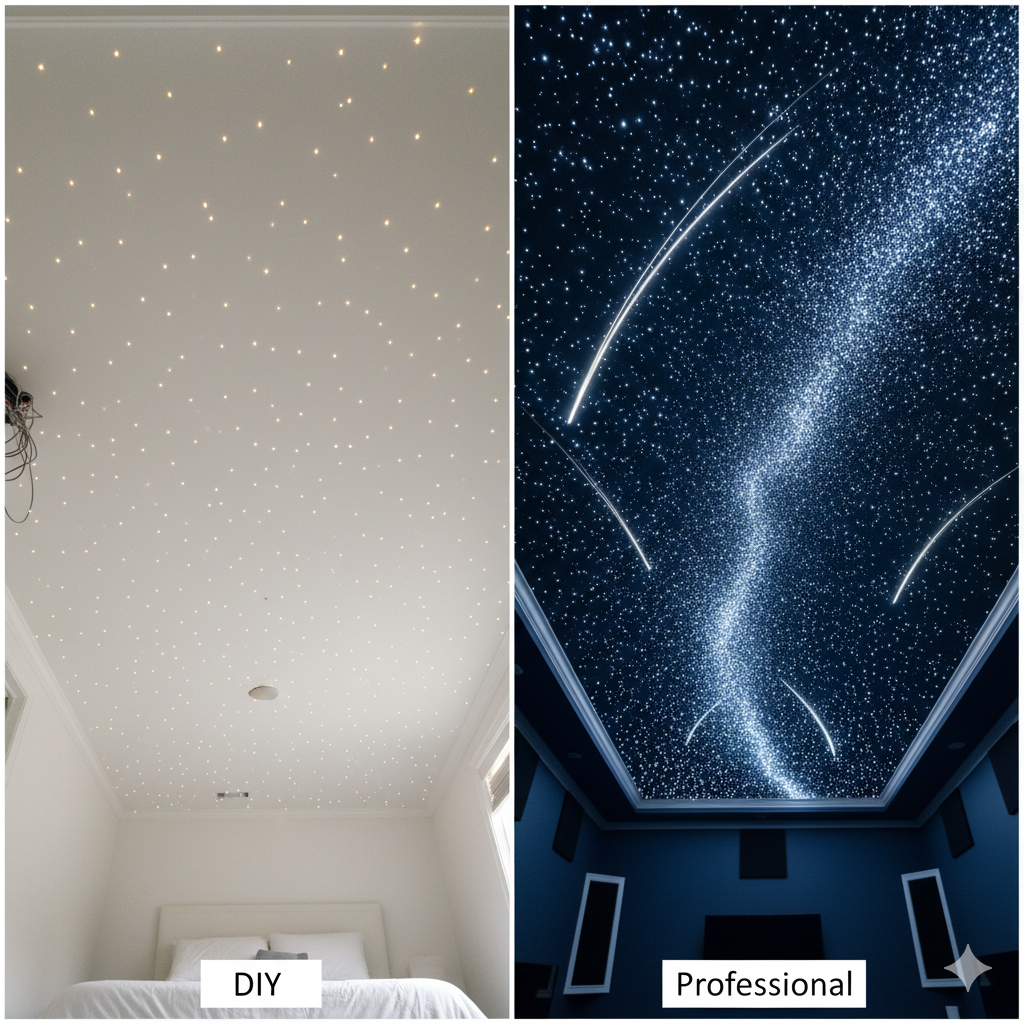
DIY Star Ceiling Kits vs. Professional Installation: Which Is Worth It?
DIY star ceiling kits have made this luxury feature accessible to more homeowners. But there's a meaningful difference between a kit and a professional installation. Here's the honest breakdown.
🔧 DIY Fiber Optic Kits
Budget: lowest cost
Install time: typically a weekend for a small room
Pros: Budget-friendly. No electrical experience needed for plug-and-play kits. Good for small rooms (10x10 max for most kits).
Cons: Limited coverage area. Wasted fiber runs. Harder to achieve realistic star distribution. Drilling hundreds of small holes requires patience and precision.
👷 Professional Installation
Budget: quoted per project
Install time: depends on size and ceiling access
Pros: Multi-diameter fibers for realistic star variation. Custom constellations, Milky Way effects, shooting stars. Proper light engine placement and clean terminations. Scalable to any room size.
Cons: Higher upfront cost. Requires scheduling with an installer.
Our recommendation: DIY kits are great for bedrooms and nurseries where you want a fun accent. For home theaters, commercial spaces, or any room where you want jaw-dropping realism, professional installation pays for itself in the quality of the result. Contact Wiedamark LED for fiber optic starlight components and kits, or for a referral to an installation partner.
Planning a project with Wiedamark LED?
Tell us about your building and we will follow up with recommendations and a project-specific proposal.
How Are Starlight Ceilings Installed? The 7-Step Process
Understanding the installation process helps you plan your budget and timeline accurately. Here's how professional led ceiling stars get installed:
Step 1: Prepare the ceiling surface and verify attic or above-ceiling access.
Step 2: Design the star layout — plan density, constellation patterns, and shooting star paths.
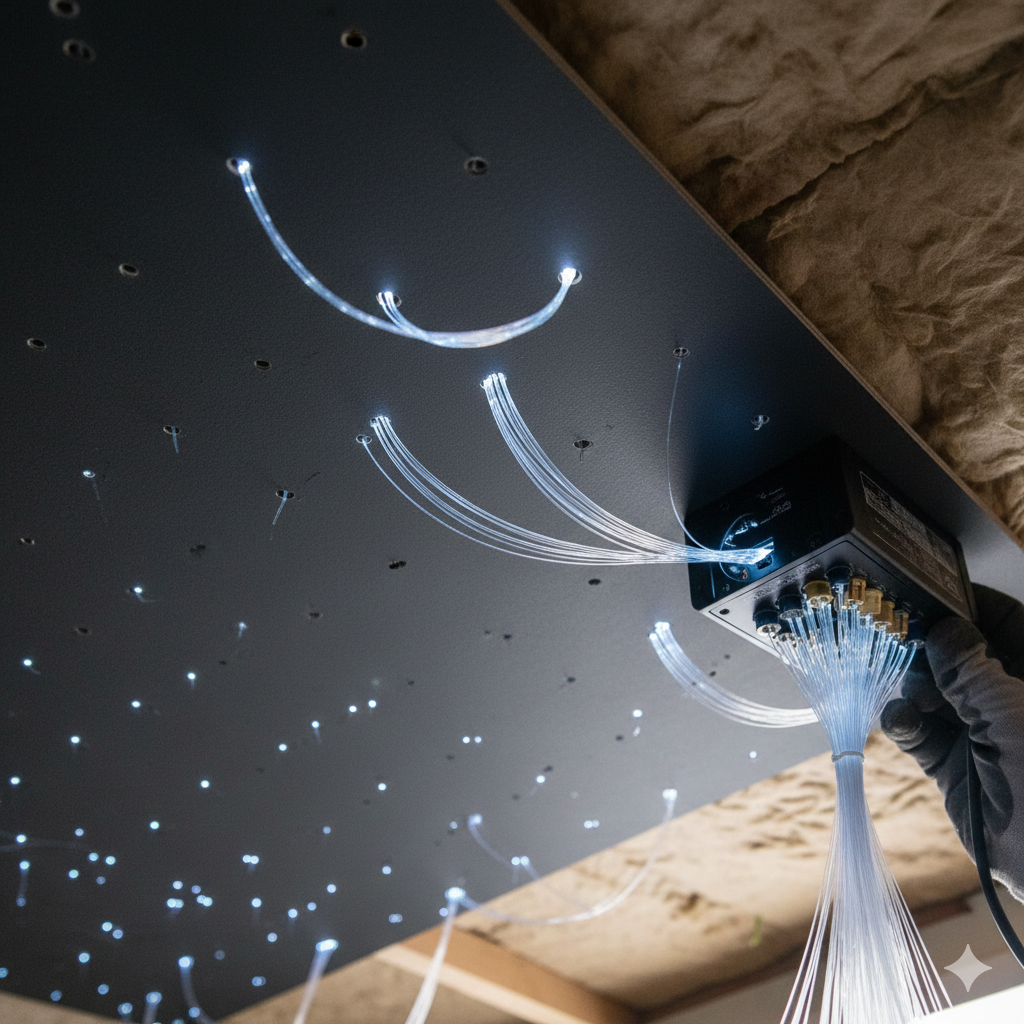
Step 3: Drill 1–2mm holes for each individual fiber strand.
Step 4: Thread fiber optic cables through holes from above the ceiling.
Step 5: Bundle fibers together and connect them to the LED light engine.
Step 6: Mount the light source in an accessible, ventilated location (attic or nearby closet).
Step 7: Test, trim fiber ends flush to ceiling, and calibrate twinkling and color effects.
For acoustic panel systems (the plug-and-play option), installation is even simpler. Pre-wired panels mount directly to drywall or drop into a suspended ceiling grid. Panels connect together and run from a shared power supply per the manufacturer's instructions.
Where Do Star Ceilings Work Best? Top Applications
Star ceilings have moved far beyond home theaters. Here are the spaces where they deliver the most impact — both residentially and commercially.
Residential Applications
Home theaters remain the #1 application. A star ceiling transforms the viewing experience and becomes a memorable feature of the home. Bedrooms create a romantic retreat atmosphere. Nurseries and kids' rooms help children fall asleep under a magical night sky. Bathrooms, saunas, and pool areas benefit from fiber optic's zero-electricity ceiling surface — since the fibers carry only light and no heat or current, they're completely safe in wet environments.
Commercial Applications
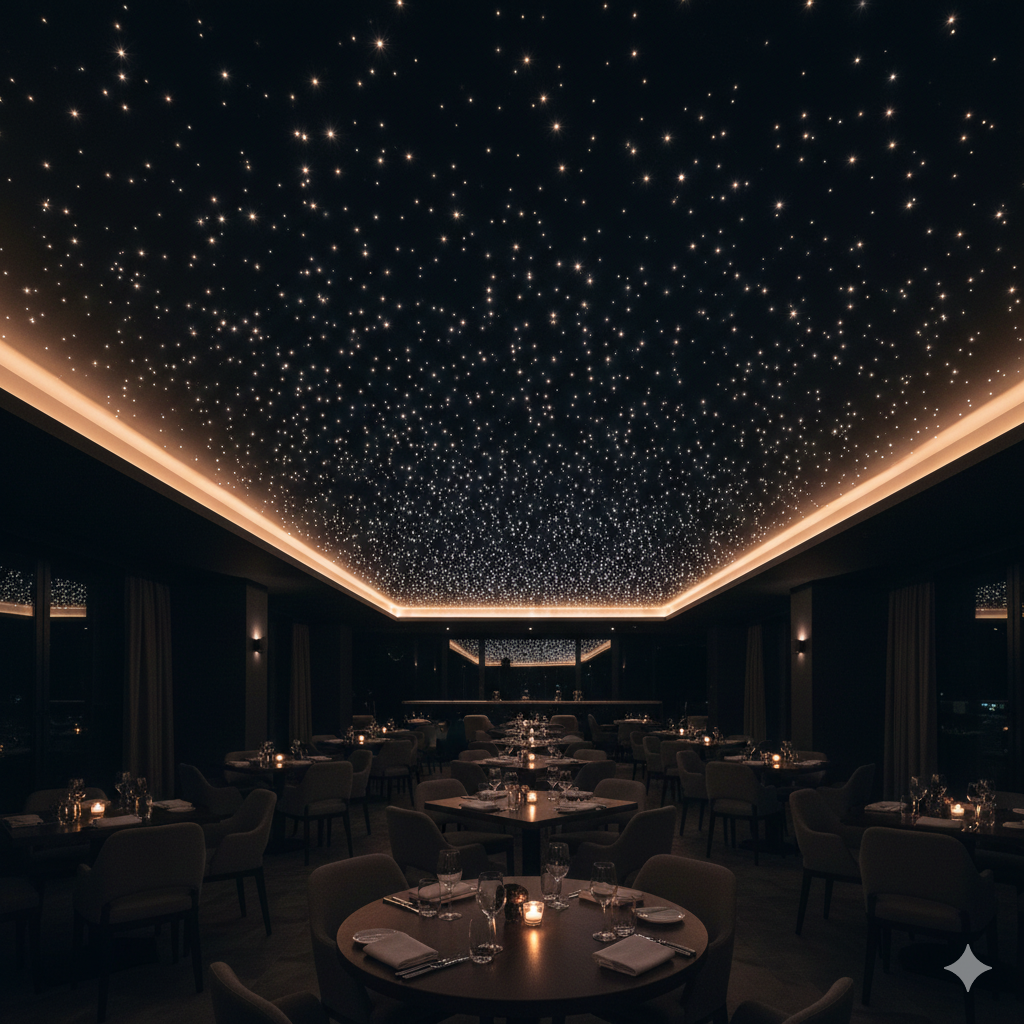
Restaurants and bars use starlight ceilings to create unforgettable dining ambiance — particularly in rooftop bars, lounges, and fine dining rooms. Hotels and spas install them in lobbies, treatment rooms, and relaxation areas. Casinos use them to create immersive environments. Healthcare and wellness spaces use calming star effects in treatment rooms and waiting areas.
For commercial LED projects beyond star ceilings — warehouse retrofits, parking structures, office lighting — our regional teams provide full-service solutions. Reach out to Dallas LED Lights, Fort Worth LED Lights, Plano LED Lights, Irving LED Lights, or Arlington LED Lights depending on your location in DFW. For statewide projects, Texas LED Lights coordinates installations across the entire state.
Do Star Ceilings Add Property Value?
Luxury lighting features like starlight ceilings can be a memorable differentiator when selling a home, particularly in properties with dedicated home theaters, spa-style bathrooms or custom master suites.
- A star ceiling is a unique feature that helps a listing stand out
- Fiber optic systems use very little electricity because one low-voltage light engine powers the whole ceiling
- Fibers have no bulbs to replace; the light engine is the serviceable part
- Acoustic star panels double as sound absorption in theaters and media rooms
For restaurants, hotels and spas, a distinctive ceiling creates the kind of atmosphere guests remember and photograph.
Star Ceiling Maintenance: What to Expect
One of the best things about fiber optic star ceilings is how little maintenance they need. LED light engines have long rated lives, and the fiber optic strands themselves have no bulbs to burn out.
The only maintenance required is occasional dusting of the ceiling surface. If a fiber gets damaged (rare), individual strands can be replaced without affecting the rest of the system. The LED light engine is the only electronic component, and it should be installed in an accessible location for the rare event it needs replacement down the road.
Frequently Asked Questions
How much does a star ceiling cost for a small bedroom?
What are star lights in a ceiling made of?
How do star lights in a ceiling work?
Are fiber optic star ceilings safe for bathrooms and pools?
How long does a star ceiling installation take?
Can I install a star ceiling without removing my existing ceiling?
How much electricity does a star ceiling use?
Can I customize my star ceiling with real constellation patterns?
What's the difference between LED star projectors and fiber optic star ceilings?
Where can I buy a star ceiling kit or get a professional installation quote?
Ready to talk about your property?
Tell us about your building and we will follow up with recommendations and a project-specific proposal.
Related
Our lighting network: starlight ceiling installation, 360° fiber optic lighting, premium pool lighting, WDM Lighting large projects, Dallas commercial LED lighting, Texas LED lighting, Plano LED lighting, LED signage, modular building solutions and Dallas modular structures.