Star Light Effect Ceiling: The Complete Guide to LED & Fiber Optic Starlight Effects for Every Room
By Wiedamark LED | Updated July 2026 | 14 min read
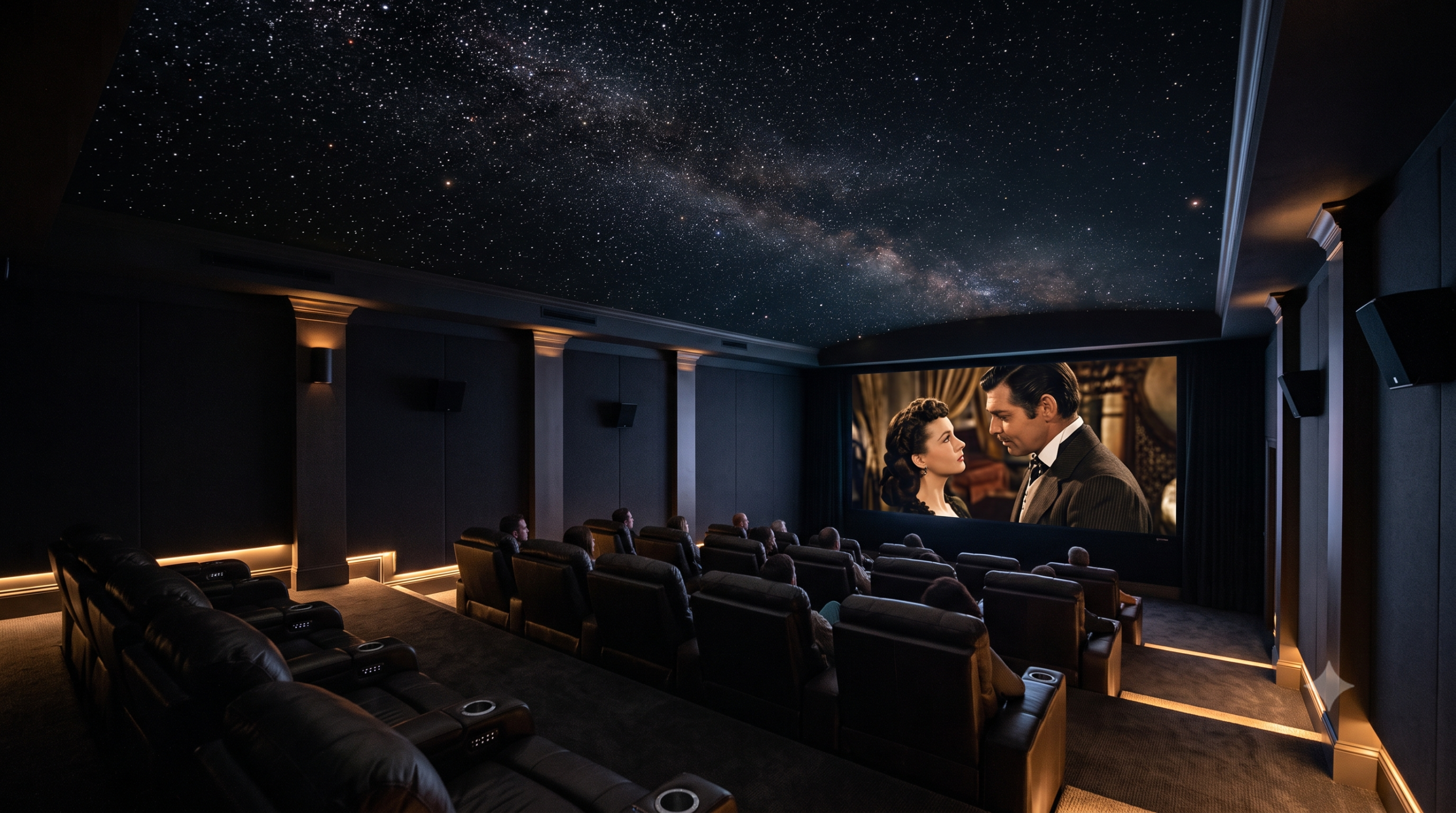
A star light effect ceiling turns any room into an immersive night sky — with effects ranging from gentle static star points to dramatic shooting stars streaking across a hand-mapped Milky Way. Today's fiber optic and LED systems offer over a dozen distinct effects you can control from your phone, and picking the right combination for your space is the difference between "nice accent light" and "jaw-dropping centerpiece."
Whether you're building a home theater, designing a master bedroom retreat, upgrading a restaurant, or creating a sensory room for a healthcare facility, this guide breaks down every starlight ceiling effect available in 2026 — what each one looks like, how it works, which rooms it's best for, and what it costs to add.
New to star ceilings? Start with our beginner's guide on how LED star light ceilings work and our detailed star ceiling cost guide for full pricing breakdowns.
⭐ Quick Answer: What Star Light Effects Are Available?
Modern LED star light ceilings and fiber optic systems offer 8+ distinct effects that can be combined and controlled via Bluetooth, WiFi, or RF remote. The most popular effects include static stars, twinkling, shooting stars/meteors, RGBW color-changing, Milky Way bands, constellation mapping, horizon glow, and music-reactive modes.
Key Takeaways:
- Twinkling is the most popular effect — created by multi-speed rotating wheels or electronic dimming
- Shooting stars add drama using dedicated meteor fiber runs with a separate light engine
- RGBW color-changing lets you shift between 16 million+ colors from an app
- Multi-diameter fibers (0.5mm to 1.5mm) create realistic depth and star brightness variation
- Music-reactive modes sync star brightness and twinkling to audio for home theaters and entertainment venues
The 8 Star Light Ceiling Effects Explained
Not all star light led ceilings look the same. The effects you choose define the entire atmosphere of the room. Here's every effect available in professional-grade systems, how each one works, and where it shines brightest.
1. Static Stars — Clean, Calm, Always On
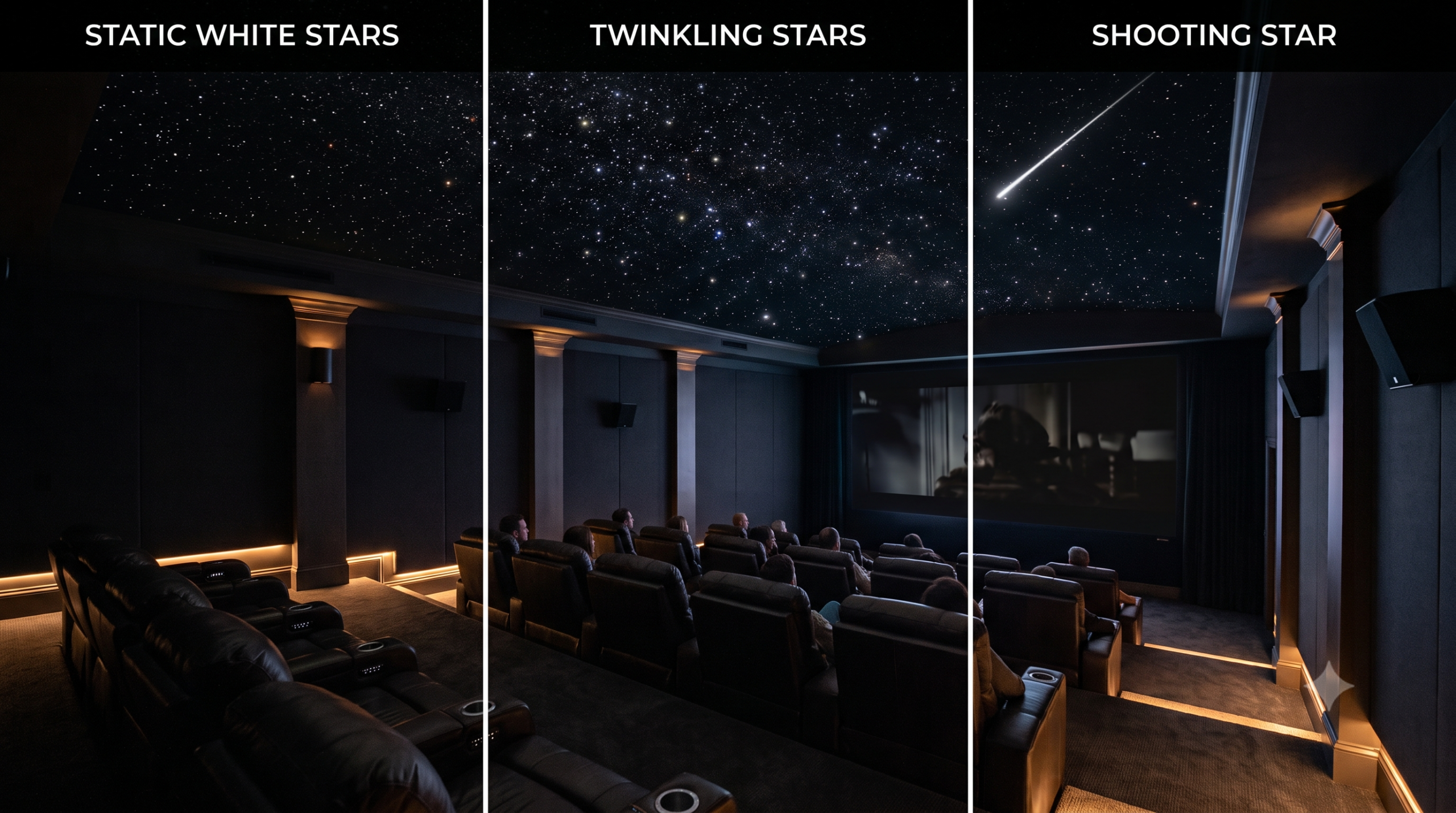
Static stars are the foundation of every star light effect ceiling. Each fiber optic strand glows at a constant brightness — no movement, no flickering. The result is a clean, calm starfield that looks like a photograph of the night sky.
How it works: The LED light engine runs at a steady output. Light enters the fiber bundle and exits each strand at the ceiling surface as a constant pinpoint of light. Multi-diameter fibers (0.5mm, 0.75mm, 1.0mm, and 1.5mm) create natural variation in star brightness — just like the real night sky where some stars appear brighter than others.
Best for: Bedrooms, nurseries, meditation rooms, spa treatment rooms — any space where calm, non-distracting ambiance is the priority. Static stars also serve as the "base layer" that all other effects build on top of.
2. Twinkling Stars — The Most Popular Effect
Twinkling is the #1 reason people choose fiber optic over other ceiling lighting. It replicates the natural "shimmer" you see in real stars — some brightening, some fading, at different speeds and intervals. Done well, the effect is mesmerizing.
How it works: There are two methods. Mechanical twinkling uses a rotating filter wheel inside the light engine that partially blocks light to different fiber bundles as it spins, creating randomized dimming. Electronic twinkling uses programmable LED drivers that individually dim and brighten fiber groups at variable speeds. The best systems combine both — roughly 25% of stars remain static while 75% twinkle at randomized rates for a natural, non-repeating pattern.
Best for: Home theaters (the all-time classic application), master bedrooms, restaurant dining rooms, hotel lobbies, and luxury retail. Twinkling adds life to a starfield without being distracting.
Pro tip: The key to realistic twinkling is fiber shuffling. When fibers are installed, adjacent strands in the ceiling should come from different positions in the fiber bundle at the light engine. This way, neighboring stars don't twinkle in sync — they shimmer independently, like real stars. The team at American Starlight Ceilings uses a braiding technique during installation that ensures completely randomized twinkling across every square foot.
3. Shooting Stars & Meteors — The "Wow" Effect
Nothing gets a reaction like a shooting star racing across the ceiling. This is the single most requested upgrade for any led star ceiling — and it's the effect that makes guests pull out their phones.
How it works: Shooting stars use a separate dedicated light engine (called a meteor engine) with 10–12 fiber strands laid in a precise linear path across the ceiling. The engine sequentially illuminates each fiber in rapid succession, creating the illusion of a streak of light racing across the sky. Systems typically fire every 1, 2, 5, or 10 minutes — adjustable from the app. Multiple shooting star paths can cross the ceiling in different directions for a meteor shower effect.
Best for: Home theaters (absolutely essential), entertainment venues, children's rooms (kids go crazy for this), restaurants and bars, and any installation where you want a true "centerpiece" conversation starter.
Cost to add: A shooting star module typically adds $150–$500 to a project depending on the number of meteor paths. Most kits from Wiedamark LED include a single shooting star engine; additional paths can be added with supplemental meteor kits.
4. RGBW Color-Changing — 16 Million Colors at Your Fingertips
Why stick with white stars when your ceiling can shift from warm amber to deep blue to vivid purple to pure white — all from your phone? RGBW (Red, Green, Blue, White) light engines let you dial in any color or set automated color sequences.
How it works: RGBW light engines contain four LED color channels that blend together. A Bluetooth or WiFi controller lets you select any color from a 16-million-color wheel, set fade/jump/flash/breathe sequences, and adjust transition speed and brightness. Because fiber optic strands are color-neutral, they transmit whatever color the engine outputs — no filters or gels needed.
Best for: Restaurants and bars (match lighting to brand colors or mood), kids' rooms (nightlight mode in soft blue, party mode in rainbow), home theaters (shift from warm white during intermission to deep blue during the movie), hotels and event spaces.
The 360 Fiber Lighting systems use advanced RGBW+UV engines that add ultraviolet as a fifth channel — creating effects like deep-space nebula tones that standard RGBW can't achieve.
5. Milky Way Band — The Ultra-Premium Look
A Milky Way effect adds a dense, glowing band of micro-stars sweeping across the ceiling — replicating the galaxy as seen from a dark sky location. This is the hallmark of a truly high-end starlight ceiling installation.
How it works: The Milky Way zone uses an extremely high density of the thinnest fiber strands (0.5mm) — often 200+ extra fibers concentrated in a 6–12 inch wide band across the ceiling. These micro-fibers are dimmed slightly compared to the main starfield, creating a soft, diffused glow that looks like the real Milky Way. The band is typically powered by a separate zone on the light engine with independent brightness control so you can dial in the perfect balance.
Best for: Dedicated home theaters, luxury master suites, high-end spas, boutique hotel rooms, and planetarium-style installations. The Milky Way separates a good star ceiling from a great one — but it does require professional installation for proper fiber placement.
Cost to add: Typically $500–$2,000 extra depending on the length of the band and number of additional micro-fibers. Worth every penny for a theater or showcase room.
6. Constellation Mapping — Your Personal Planetarium
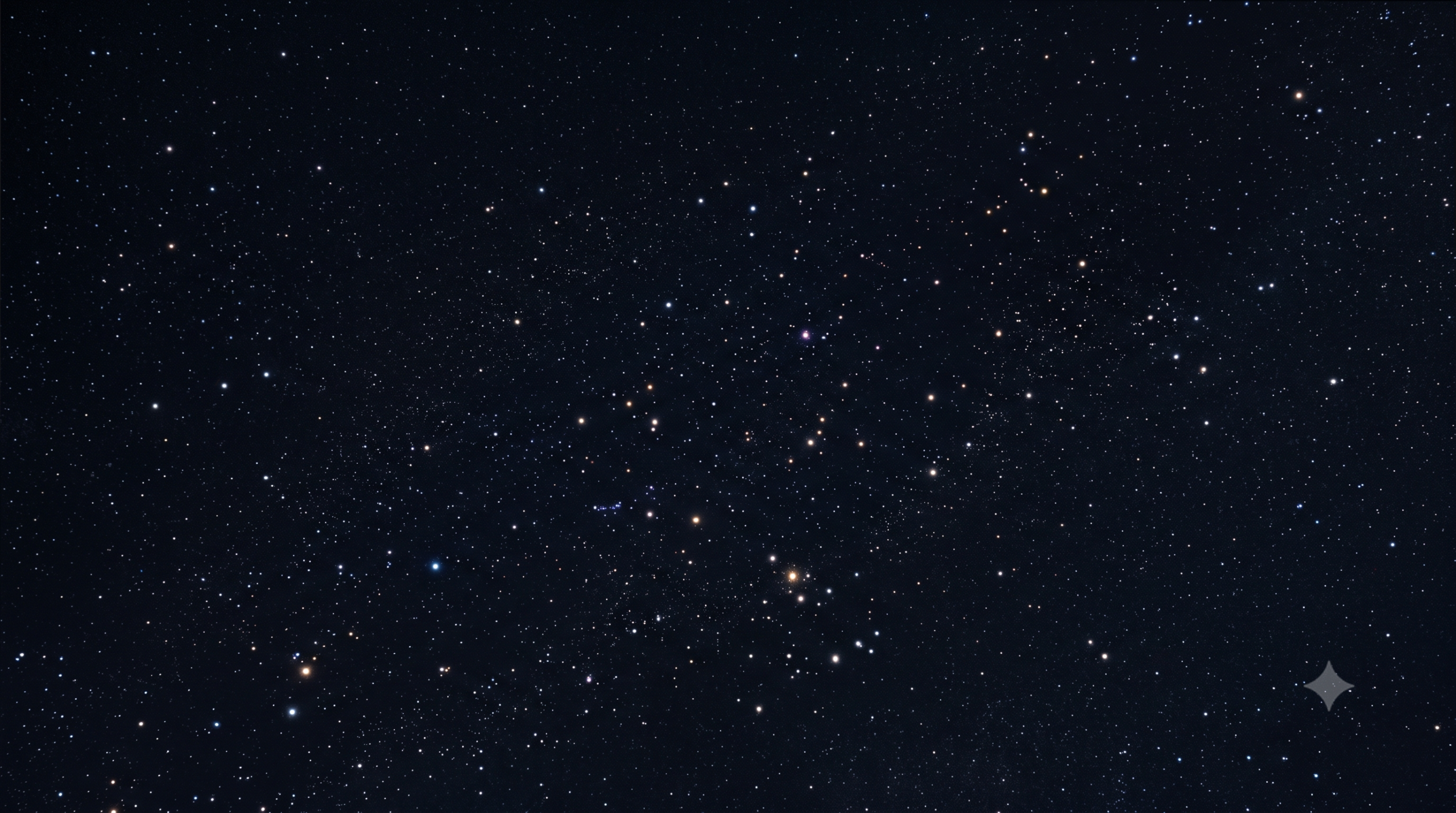
Why settle for random stars when your ceiling can display the exact constellations visible from your location on a specific date? Constellation mapping uses astronomically accurate star charts to place every fiber in the correct position — including the right brightness for each star's magnitude.
How it works: A star map is generated for a specific location, date, and time (wedding night, child's birthday, anniversary). Each star is assigned a fiber diameter based on its actual astronomical magnitude — bright stars like Sirius and Vega get 1.5mm fibers, medium stars get 1.0mm, and dimmer stars get 0.75mm or 0.5mm. The map is printed to scale, positioned over the ceiling panels, and each hole is drilled at the exact mapped coordinates.
Best for: Master bedrooms (wedding night sky), nurseries (child's birth night), custom homes, and anyone who wants scientific accuracy alongside beauty. Popular constellations include Orion, the Big Dipper, Cassiopeia, and zodiac signs.
7. Horizon Glow / Perimeter Lighting — Depth and Atmosphere
Horizon glow adds a soft, colored LED light around the perimeter of the star ceiling — typically hidden behind a crown molding, cove, or bulkhead. The effect creates the illusion of a distant sunset, city glow, or moonlit horizon below the starfield.
How it works: LED strip lights (usually RGBW) are installed in a channel behind the perimeter molding, facing upward toward the star panels. The indirect light washes up and fades into the starfield, creating a natural gradient — like looking at the night sky above a distant horizon. The color and brightness are independently controllable, so you can set warm amber for a sunset vibe, deep blue for an ocean horizon, or purple for a cosmic nebula glow.
Best for: Home theaters (the industry-standard accent for star panel installations), restaurants, bedrooms with tray ceilings, and any room where the star panels don't extend fully wall-to-wall. A 3–6 inch gap between the panel edge and the wall is typical to let the glow spill out.
8. Music-Reactive / Sound-Activated Mode
Music-reactive mode syncs the star ceiling's brightness, twinkling speed, and color changes to the audio playing in the room. During a quiet dialogue scene, stars glow softly. When the bass drops, the entire ceiling pulses and shimmers.
How it works: The light engine has a built-in microphone that detects ambient sound. Software processes the audio signal and adjusts LED output in real time — louder sounds increase brightness and twinkling speed, while quiet moments dim the ceiling to a gentle glow. Some advanced controllers allow direct audio input (3.5mm or Bluetooth audio) for tighter synchronization with your sound system.
Best for: Home theaters with Dolby Atmos or immersive audio, nightclubs and bars, gaming rooms, DJ booths, karaoke rooms, and any entertainment space where music and lighting should work together.
Star Light Effect Comparison: Which Effects Work Best Where?
Here's a quick-reference table showing which star light effect ceiling options work best for each room type. Most professional installations combine 3–5 effects for maximum impact.
| Effect | Home Theater | Bedroom | Restaurant | Spa / Pool | Kids' Room | Add-On Cost |
|---|---|---|---|---|---|---|
| Static Stars | ✅ | ✅ | ✅ | ✅ | ✅ | Included |
| Twinkling | ⭐ Essential | ✅ | ⭐ Essential | ✅ | ✅ | $50 – $200 |
| Shooting Stars | ⭐ Essential | Optional | ✅ | Optional | ✅ | $150 – $500 |
| RGBW Color | ✅ | ✅ | ⭐ Essential | ✅ | ⭐ Essential | $200 – $500 |
| Milky Way | ⭐ Essential | Optional | Optional | — | — | $500 – $2,000 |
| Constellations | ✅ | ✅ | Optional | — | ✅ | $500 – $2,000 |
| Horizon Glow | ⭐ Essential | ✅ | ✅ | ✅ | Optional | $100 – $400 |
| Music-Reactive | ⭐ Essential | — | ✅ | — | Optional | $50 – $150 |
Best Star Light Effect Combinations by Room
Knowing which effects exist is step one. Here's how to combine them for maximum impact in specific spaces.
🎬 Home Theater — The Ultimate Setup
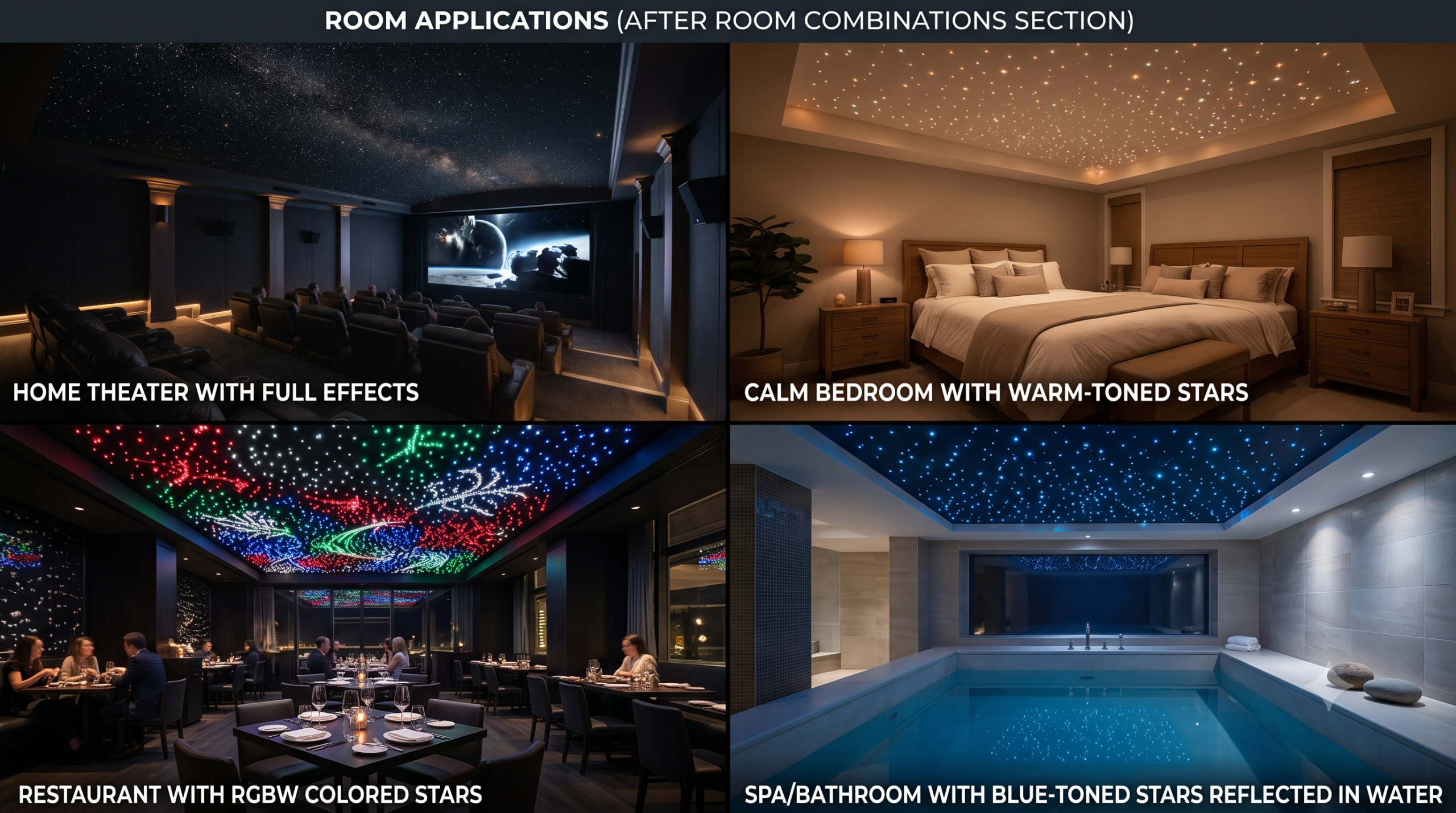
Recommended effects: Twinkling + Shooting Stars + Milky Way + Horizon Glow + Music-Reactive
Star density: 8–15 fibers per sq ft with multi-diameter strands
Why it works: The dark room environment is perfect for maximum effect visibility. Music-reactive mode syncs with your Dolby Atmos or 7.1 surround system. The Milky Way becomes the visual centerpiece during dark scenes. Shooting stars fire between scenes for intermission drama.
Typical cost: $3,500 – $10,000 for a 200–400 sq ft theater
🛏️ Bedroom / Master Suite
Recommended effects: Twinkling + RGBW Color (warm white dominant) + Optional Constellations
Star density: 3–5 fibers per sq ft (calmer, less busy)
Why it works: Gentle twinkling aids relaxation and sleep. Warm white tones are soothing without stimulating alertness. Custom constellation mapping (wedding night sky, birth night) adds personal meaning.
Typical cost: $1,300 – $4,000 for a 100–150 sq ft ceiling
🍽️ Restaurant / Bar / Lounge
Recommended effects: Twinkling + RGBW Color + Horizon Glow + Shooting Stars
Star density: 5–8 fibers per sq ft
Why it works: RGBW color lets you match lighting to brand identity or set different moods for brunch vs. dinner service. The combination drives social media sharing — guests photograph the ceiling and tag your location. Shooting stars create memorable dining moments.
Typical cost: $8,000 – $25,000 for a 500–2,000 sq ft dining area
🏊 Spa / Pool / Bathroom / Sauna
Recommended effects: Static or Gentle Twinkling + RGBW Color + Horizon Glow
Star density: 3–5 fibers per sq ft
Why it works: Fiber optic carries zero electricity to the ceiling surface — completely safe in wet, humid, and high-temperature environments. Cool blue and teal tones complement water features. Slow twinkling enhances the meditative atmosphere.
Typical cost: $1,800 – $5,000 (bathroom) / $5,000 – $20,000 (commercial spa/pool)
For pool and aquatic installations, waterproof fiber optic solutions are essential. Our Premium Pool Lighting division designs submersible fiber optic systems rated for chlorine, salt water, and steam room conditions.
How to Control Your Star Ceiling Effects
Having amazing effects means nothing if you can't easily control them. Modern led star light ceiling systems offer multiple control options:
| Control Method | What You Can Do | Range | Best For |
|---|---|---|---|
| Bluetooth App (iOS/Android) | Full control — colors, brightness, twinkle speed, shooting star frequency, modes | ~30 ft | Residential |
| RF Remote | On/off, color presets, brightness, basic modes | ~65 ft | All applications |
| WiFi / Smart Home | Remote access, scheduling, voice control (Alexa/Google), scene integration | Unlimited | Smart home setups |
| Wall Switch / Hardwired | On/off only | N/A | Commercial (staff-operated) |
WDM Lighting (Wiedamark) star ceiling kits include Bluetooth controllers with both iOS and Android app support, plus an RF remote as backup. Every effect described in this guide — twinkling speed, shooting star frequency, RGBW color selection, and music-reactive sensitivity — is adjustable from the app.
Why Fiber Diameter Matters More Than You Think
The single biggest difference between an amateur and professional starlight ceiling isn't the effects — it's the fiber diameter mix. Budget kits use a single fiber size, which looks flat and artificial. Professional systems use 4+ diameters to create realistic depth.
| Fiber Diameter | Appearance | Star Equivalent | Typical Mix % |
|---|---|---|---|
| 0.50mm | Tiny, faint pinpoints | Distant/dim stars, Milky Way | 40–50% |
| 0.75mm | Small, noticeable points | Average-brightness stars | 25–30% |
| 1.00mm | Medium, clearly visible | Bright stars (constellation anchors) | 15–20% |
| 1.50mm | Large, dominant points | Brightest stars (Sirius, Vega, Polaris) | 5–10% |
This variation is what makes people look up and say "that looks like the real sky." Without it, you get a flat, evenly-bright dot pattern that reads as decorative — not immersive.
Commercial Star Light Effect Ceiling Applications
Star light effect ceilings have moved far beyond residential home theaters. Here's where they're making the biggest commercial impact.
Hospitality: Hotels, resorts, and boutique properties install starlight ceilings in lobbies, suites, and rooftop bars. The effect commands premium nightly rates and drives social media exposure — guests photograph and share the ceiling without being asked.
Healthcare: Hospitals, dental offices, and cancer treatment centers use calming star effects in treatment rooms, MRI suites, and waiting areas. Calming visual environments can reduce patient anxiety and improve satisfaction scores.
Aviation: Airlines use fiber optic star ceilings in first-class cabin ceilings. PMMA fiber systems are 30% lighter than traditional LED alternatives — a critical factor in aircraft applications.
Automotive: Luxury car brands have popularized fiber optic starlight headliners. The same technology scales to architectural ceilings using larger panels and higher fiber counts.
For commercial LED projects beyond star ceilings — warehouse retrofits, parking structures, office lighting — our regional teams across DFW handle everything. Reach Dallas LED Lights, Fort Worth LED Lights, Plano LED Lights, Irving LED Lights, or Arlington LED Lights depending on your location. Texas LED Lights coordinates statewide projects. For modular construction with integrated lighting, check out America Modular Buildings and Dallas Modular Structures.
Frequently Asked Questions About Star Light Effect Ceilings
What is a star light effect ceiling?
A star light effect ceiling uses fiber optic strands or LEDs embedded in the ceiling to create the appearance of a night sky. A single LED light engine powers hundreds or thousands of individual fiber strands, each producing a tiny point of light at the ceiling surface. Effects like twinkling, shooting stars, color-changing, and Milky Way bands are created by the light engine — the fibers themselves carry only light, no electricity.
What effects can an LED star light ceiling create?
Professional LED star light ceilings can create 8+ effects including static stars, twinkling, shooting stars/meteors, RGBW color-changing (16 million colors), Milky Way bands, custom constellation patterns, horizon perimeter glow, and music-reactive modes that sync to audio. Most systems let you combine multiple effects simultaneously and control them via smartphone app.
How does the twinkling effect work in star ceilings?
Twinkling is created two ways. Mechanical twinkling uses a rotating filter wheel in the light engine that partially blocks light to different fiber groups as it spins. Electronic twinkling uses programmable LED drivers to individually dim and brighten fiber groups at variable speeds. The best systems use both methods with roughly 25% static stars and 75% randomly twinkling stars for a natural, non-repeating pattern.
How do shooting star effects work in a star ceiling?
Shooting stars use a separate meteor engine with 10–12 fiber strands laid in a linear path across the ceiling. The engine rapidly illuminates each fiber in sequence, creating the illusion of a streak of light racing across the sky. Frequency is adjustable — typically every 1, 2, 5, or 10 minutes. Multiple paths can cross in different directions for meteor shower effects.
What is the best star light effect for a home theater?
The ultimate home theater setup combines twinkling stars, shooting stars, a Milky Way band, horizon glow, and music-reactive mode. Use 8–15 fibers per square foot with multi-diameter strands (0.5mm to 1.5mm) for realistic depth. This combination creates a fully immersive experience that responds to your movie's audio.
Can you change the color of star ceiling lights?
Yes. RGBW (Red, Green, Blue, White) light engines let you select any color from a 16-million-color wheel via smartphone app or remote. You can set specific colors, create fade/flash/breathe sequences, and adjust transition speed. Fiber optic strands are color-neutral, so they transmit whatever color the engine outputs.
Are star light ceilings safe for bathrooms and wet areas?
Absolutely. Fiber optic strands carry only light — zero electricity or heat reaches the ceiling surface. This makes fiber optic the safest ceiling lighting option for bathrooms, steam rooms, saunas, and pool areas. The LED light engine must be mounted in a dry, ventilated location away from moisture, but the fibers themselves are fully waterproof.
How much does it cost to add shooting star effects?
A single shooting star module typically costs $150–$500 depending on path length and fiber count. Most Wiedamark LED kits include one shooting star engine. Additional meteor paths can be added for more dramatic effects. For complete pricing, see our star ceiling cost guide.
Can star ceilings sync to music or movies?
Yes. Music-reactive mode uses a built-in microphone or direct audio input to sync star brightness, twinkling speed, and color changes to the sound playing in the room. Louder sounds increase brightness and speed, while quiet moments dim the ceiling. This is especially popular in home theaters with Dolby Atmos or surround sound systems.
Where can I buy a star ceiling kit with all these effects?
WDM Lighting (Wiedamark) offers complete star ceiling kits with twinkling, shooting stars, RGBW color-changing, and Bluetooth/RF control — assembled at our Dallas facility and shipped nationwide. For custom professional installations including Milky Way, constellation mapping, and multi-zone effects, contact American Starlight Ceilings or call (702) 738-2218 for a free quote.